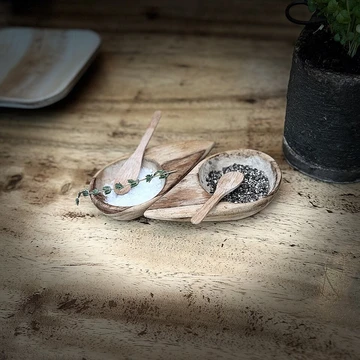
Mustard (condiment)
A widely used condiment made from ground mustard seeds.

Mustard is a condiment made from the seeds of a mustard plant, which may be the white/yellow mustard (Sinapis alba), brown mustard (Brassica juncea), or black mustard (Rhamphospermum nigrum). The whole, ground, cracked, or bruised seeds are mixed with water, vinegar, lemon juice, wine, or other liquids, salt, and often other flavourings and spices, to create a paste or sauce ranging in colour from bright yellow to dark brown. It is one of the most popular and widely used spices and condiments in the world, commonly paired with meats, vegetables, and cheeses, and used as an ingredient in many dressings, glazes, sauces, soups, relishes, and marinades.
- type
- Condiment
- primary_ingredients
- Mustard seeds (Sinapis alba, Brassica juncea, or Rhamphospermum nigrum)
- earliest_written_recipe
- Late 4th or early 5th century (De re coquinaria)
- first_english_attestation
- Late 13th century
- known_for
- Pungent, spicy flavour; use as a condiment and emulsifier
Lore & Background
The Romans mixed unfermented grape juice (must) with ground mustard seeds to make 'burning must' (mustum ardens), and a recipe for mustard appears in the Roman cookery book De re coquinaria from the late fourth or early fifth century.
Reader's Guide
Mustard's significance lies in its long history as a versatile condiment and spice, used across many cultures for thousands of years. From its earliest known use in Neolithic Syria to its cultivation in the Indus Valley and its development in Zhou dynasty China, mustard has been a constant presence in human cuisine. The Romans formalized a recipe, and by the 13th century Dijon, France, had become a recognized centre for mustard making. Louis World's Fair. Today, mustard is used globally as a condiment, an ingredient in sauces and dressings, and as an emulsifier. Its flavour ranges from sweet to spicy, determined by seed type, preparation, and ingredients. The chemical reaction between myrosinase and glucosinolates produces isothiocyanates that create its characteristic pungency.
Did You Know?
- The English word 'mustard' derives from Latin 'mustum' ('must'), referring to a Roman condiment of grape must mixed with ground mustard seeds.
- Mustard seeds do not produce phytoliths, making evidence of mustard in the archaeological record scarce.
- Mustard as an emulsifier can stabilize a mixture of two or more immiscible liquids, such as oil and water.
Ancient Roots Across Continents
Mustard's presence in human food history stretches back further than most condiments, yet the archaeological trail is frustratingly thin. Because plants in the Brassicaceae family fail to accumulate silica, they leave no phytoliths behind, making direct identification in excavated soil extremely difficult. What evidence does survive, however, is remarkable. Mustard greens enjoyed widespread popularity in Chinese kitchens, and the condiment's use in Africa spans thousands of years as well. Together these scattered fragments paint a picture of a seed whose culinary value was recognized almost as soon as agriculture itself took hold.
Dijon and the European Mustard Tradition
Roman cooks gave mustard a sophisticated role in the ancient Mediterranean kitchen. The anonymously compiled De re coquinaria, dating to the late fourth or early fifth century, preserves a recipe for a glaze meant to coat spit-roasted boar: ground mustard blended with pepper, caraway, lovage, grilled coriander, dill, celery, thyme, oregano, onion, honey, vinegar, fish sauce, and oil. The Romans also mixed unfermented grape juice—mustum—with ground mustard seeds (sinapis) to create what they called burning must. In medieval France the tradition deepened.
A Global Kitchen Staple
Few condiments achieve the geographic breadth of mustard. It appears as a table accompaniment in India and Bangladesh, across the Mediterranean, throughout northern and southeastern Europe, in Asian and African cuisines, and across the Americas, earning its reputation as one of the world's most widely used spices. In the Netherlands and Belgium it seasons croquettes, bitterballen, and cheese, and features in a creamy soup built with mustard, cream, parsley, garlic, and salted bacon. In East Indian cooking, mustard seeds serve as a primary spice, lending a distinctive pungency to vegetable and fish curries. Beyond the plate, mustard functions as a natural emulsifier, helping stabilize mixtures of immiscible liquids like oil and water, and it can prevent Hollandaise sauce from curdling. It also anchors the flavour of mayonnaise, vinaigrettes, marinades, and barbecue sauces, and remains a classic pairing for hot dogs, pretzels, and bratwurst. Nutritionally, a teaspoon delivers roughly five kilocalories along with trace selenium and omega-3 fatty acids. Whether ground into a bright-yellow paste or scattered whole into a hot pan, the seed's strong, pungent, slightly bitter character adapts to sweet or spicy preparations with remarkable ease.
From Latin Roots to the American Hot Dog
The English word mustard traces back through Anglo-Norman mustarde and Old French mostarde to the Latin mustum, meaning must—the unfermented grape juice that Romans originally combined with ground mustard seeds to form a paste. German speakers generally call the condiment Senf, while northern Germany uses the closely related Mostrich. The term first appears in English texts in the late thirteenth century, though it had already been in use as a surname a full century earlier. The town of Tewkesbury became famous for its own variety, incorporating horseradish, and these balls were exported to London; William Shakespeare even references them in King Henry the Fourth, Part II. Louis World's Fair, where the R.T. French Company introduced its bright-yellow French's mustard to crowds seeking a tangy companion for the newly popular frankfurter.
Frequently Asked Questions
Who is Mustard (condiment)?
Mustard is a pungent, spicy condiment created by mixing ground, cracked, or bruised mustard seeds with liquids such as water, vinegar, or wine, along with salt and optional spices. It produces a paste or sauce that ranges in color from bright yellow to dark brown and is one of the most widely used flavorings globally.
What are Mustard (condiment)'s powers and role in the kitchen?
Mustard delivers a sharp, spicy heat and acts as a natural emulsifier, helping bind fats and liquids together in dressings and sauces. It is commonly paired with meats, vegetables, and cheeses, and appears as an ingredient in countless prepared dishes worldwide.
Why is Mustard (condiment) important to the culinary world?
Mustard is one of the most popular and versatile condiments on Earth, valued for its pungent flavor and its ability to act as an emulsifier in sauces and dressings. Its three main seed varieties—white/yellow (Sinapis alba), brown (Brassica juncea), and black (Rhamphospermum nigrum)—allow chefs to dial in different heat levels and color profiles.
What are Mustard (condiment)'s primary ingredients?
The core ingredient is the mustard seed, sourced from one of three plant species: Sinapis alba, Brassica juncea, or Rhamphospermum nigrum. These seeds are combined with water, vinegar, lemon juice, or wine, salt, and often additional flavorings or spices to form the finished paste or sauce.
More in Cuisine And Condiments 1-22
Spotted an error? Know more?
This is a living reference — every entry is fact-audited, and reader corrections feed straight into our audit queue. Suggest an edit · See this site's audit record